Appliance Repair Career Training Guide for 2026
This appliance repair career training guide shows how to build diagnostic skills, earn certification, and prepare for service work or business ownership.
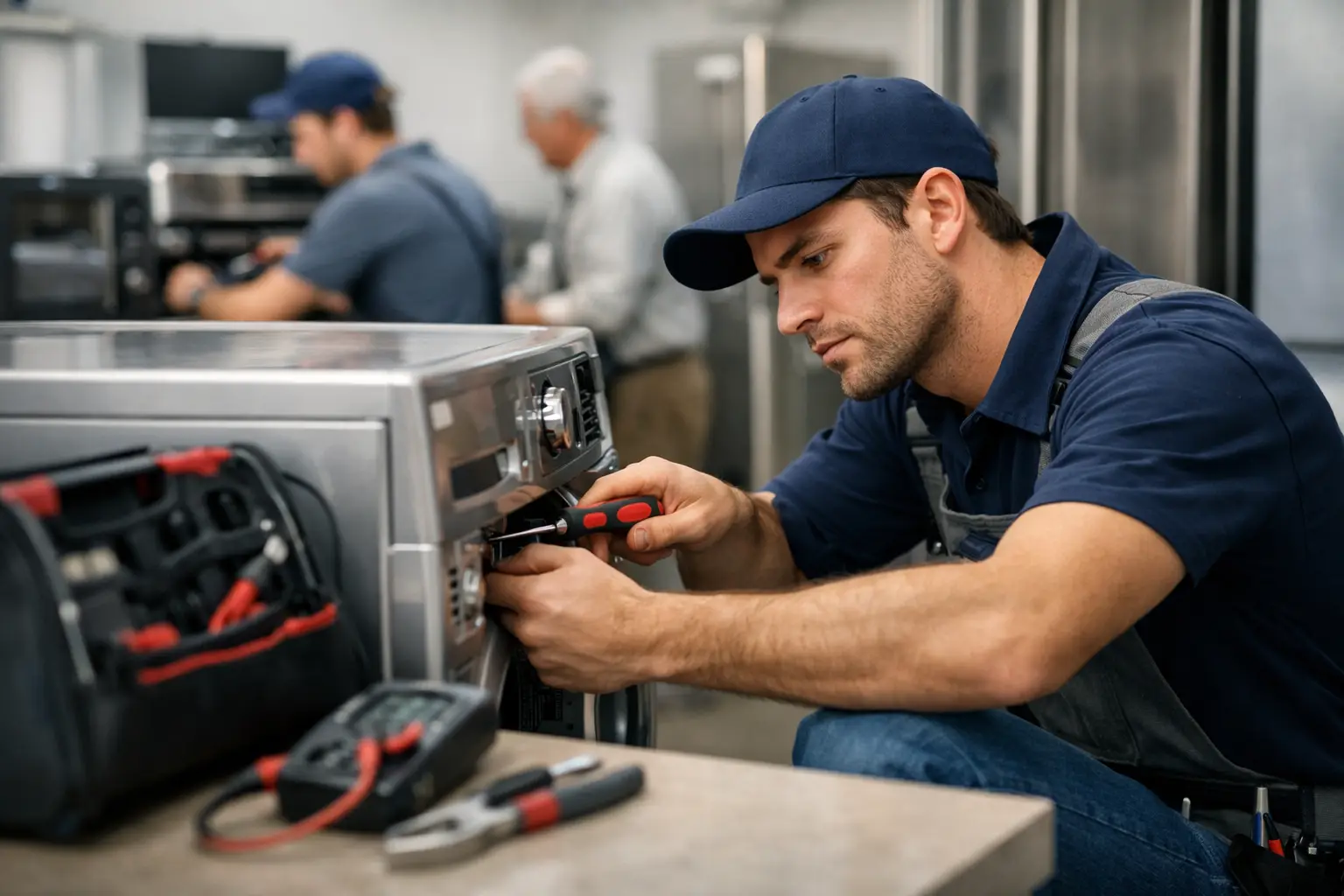
A failed refrigerator, a no-heat dryer, and a dishwasher that will not drain are not abstract problems. They are service calls homeowners need solved quickly, often the same day. That demand creates a practical opening for people who want a hands-on career with a clear path from training to paid work. This appliance repair career training guide explains what it takes to move from beginner to job-ready technician without relying on random videos, guesswork, or years of unpaid shadowing.
Appliance repair is not about swapping parts until something works. The technicians who build strong reputations understand electrical safety, read the symptoms, test the circuit, isolate the failed component, document the repair, and communicate clearly with the customer. Those skills can lead to a role with an established service company or create the foundation for an independent repair business.
Why Appliance Repair Is a Career Move, Not a Side Skill
Appliances are essential equipment in nearly every home, rental property, restaurant, and laundry operation. When a washer stops spinning or a range will not heat, customers are not waiting for a future technology to fix it. They need a technician who can arrive, diagnose the problem, source the right part, and restore operation.
That is what makes appliance repair a durable skilled trade. The work is physical, diagnostic, and customer-facing. Software can help a technician identify an error code or locate a wiring reference, but it cannot safely meter voltage at a terminal, recover a customer relationship after a missed appointment, or confirm that a repaired unit operates correctly under load.
Income potential depends on your market, speed, specialty, pricing, and whether you work as an employee or owner. A new technician should not expect to walk into six-figure earnings on day one. But a capable technician who improves diagnostic accuracy, controls callbacks, and learns the business side of service can build toward high earnings over time. The strongest opportunity often comes from pairing technical competence with dependable field operations.
Appliance Repair Career Training Guide: What You Must Learn
A serious training path starts before the first refrigerator diagnosis. New technicians need to understand how to work safely around electricity, moving components, hot surfaces, sharp sheet metal, refrigerant systems, and microwave high-voltage circuits. Lockout/tagout procedures, personal protective equipment, safe meter use, and verification practices are not filler material. They are the habits that protect you and the customer’s property.
Electrical Testing Is the Core Skill
Most appliance failures eventually lead back to a testable condition: an open thermal fuse, failed door switch, damaged wire, faulty control output, shorted heating element, weak motor circuit, or bad sensor reading. That is why multimeter proficiency is central to appliance repair training.
You need to know the difference between voltage, resistance, continuity, and current, then understand when each test applies. Testing a thermistor, for example, is not simply checking whether it has continuity. You compare resistance to the expected temperature relationship and determine whether the control is receiving a believable signal.
Good training teaches a repeatable diagnostic workflow. Start by verifying the customer complaint. Check installation conditions and obvious mechanical issues. Review fault codes when available. Consult the circuit path. Test with a purpose. Then confirm the repair before closing the job. This process is slower at first, but it is far faster than ordering unnecessary parts and returning to the same house twice.
Learn Categories Without Becoming Trapped in One
A broad appliance technician needs working knowledge across the major categories: washers and dryers, refrigerators and freezers, dishwashers, ranges and ovens, and microwaves. Each category has common failure patterns, but the underlying diagnostic principles overlap.
Laundry appliances teach motor circuits, lid or door safety systems, drain behavior, suspension, heating, and control communication. Refrigeration introduces defrost systems, fans, thermistor diagnostics, ice makers, airflow, and sealed system fundamentals. Cooking equipment requires attention to high heat, ignition, bake and broil circuits, temperature sensing, and gas safety where applicable. Dishwashers build skill in water flow, wash motors, drain systems, leaks, and dispenser operation.
Microwaves deserve special caution. Their high-voltage components can retain dangerous energy even after the unit is unplugged. Entry-level technicians should learn the safety boundaries and correct procedures before attempting internal microwave repairs. Training that treats every appliance as a simple parts replacement exercise creates avoidable risk.
Practice the Decisions You Will Make in the Field
Knowing terminology is not the same as diagnosing a live service call. Field readiness comes from working through realistic symptoms, conflicting evidence, error codes, wiring diagrams, and customer details. Scenario-based practice forces you to make decisions in the right order.
For example, a dryer that tumbles but does not heat could involve a tripped breaker, incorrect supply voltage, an open element, a failed thermal device, a centrifugal switch problem, restricted airflow, or a control issue. A training exercise should make you select tests, interpret results, and justify the conclusion instead of revealing the answer after one clue.
That kind of repetition develops technician judgment. It also helps new entrants understand that not every repair is worth performing. A cracked tub, severe cabinet corrosion, major sealed-system failure, or unavailable part may lead to a replacement recommendation. Professional service means giving the customer an honest, documented decision.
Choose Training That Produces Field-Ready Deliverables
Before paying for a program, look past broad promises about certification or career growth. Ask what you will actually be able to do by the end. Can you safely use a multimeter? Can you read a wiring diagram? Can you document findings in a job ticket? Can you explain a repair option in plain language? Can you recognize when a job is outside your current scope?
A structured program should move in a logical sequence. Start with safety, tools, electrical fundamentals, and diagnostic process. Then progress through appliance categories and finish with customer documentation, estimating, dispatch habits, and repair-business operations. This order matters because a technician who understands electrical testing can transfer that skill across many brands and appliance types.
The format matters, too. In-person school offers access to physical equipment, but it can require commuting, fixed schedules, and higher tuition. Informal job shadowing can provide real-world exposure, but the learning sequence depends on the calls that happen to come in. Online vocational training offers flexibility, especially for adults working another job, but it must include assignments, feedback, practical simulations, and support to prevent passive learning.
Appliance Repair Academy uses a 12-week structure built by an active repair-company owner. Students work through safety, electrical testing, major appliance categories, diagnostic workflows, customer documentation, and business operations. More than 80 scenario-based simulations and graded coursework turn lesson material into practice, while a 75-question final certification assessment gives students a clear standard to prepare for.
Use AI as a Field Tool, Not a Substitute for Skill
AI has a useful place in appliance service when it shortens research time and improves documentation. It does not replace technical judgment. A photo-based fault suggestion may point you toward likely causes, but you still need to verify voltage, resistance, airflow, or mechanical condition before recommending a repair.
The best use of an AI assistant is operational. Use it to look up error codes, identify likely components from photos, review wiring references, organize job tickets, draft customer-ready findings, and reinforce multimeter testing steps. That can help newer technicians stay organized while experienced technicians move faster through research-heavy calls.
Paid Academy tuition includes a 12-month subscription to the Appliance Repair Assistant AI app. Used correctly, it functions like a field reference in your pocket, supporting the hands-on work rather than pretending to do it for you.
Build a Launch Plan Before You Finish Training
Training has more value when you decide how you will apply it. If you want employment, prepare a simple resume that highlights electrical testing, appliance categories completed, safety training, assessments, and customer-service experience. Be ready to explain your diagnostic process in an interview, not just list the appliances you have studied.
If your goal is business ownership, start with a lean operating plan. Define your service area, decide which categories you will accept, set basic diagnostic and trip charges, organize insurance and licensing requirements for your location, and create a process for parts ordering and follow-up. You do not need to service every brand or every sealed-system issue immediately. A controlled scope protects your reputation while your capability grows.
Your first goal is not to look like the biggest company in town. It is to become the technician who arrives prepared, tests before replacing parts, leaves clean documentation, and earns the next referral. Explore the Academy program page for structured training details, then download the Appliance Repair Assistant AI app to support your hands-on diagnostic practice.