Technician Certification for Appliance Repair
Technician certification should prove more than test scores. Learn what appliance repair training must cover for safe, paid fieldwork and business growth now.
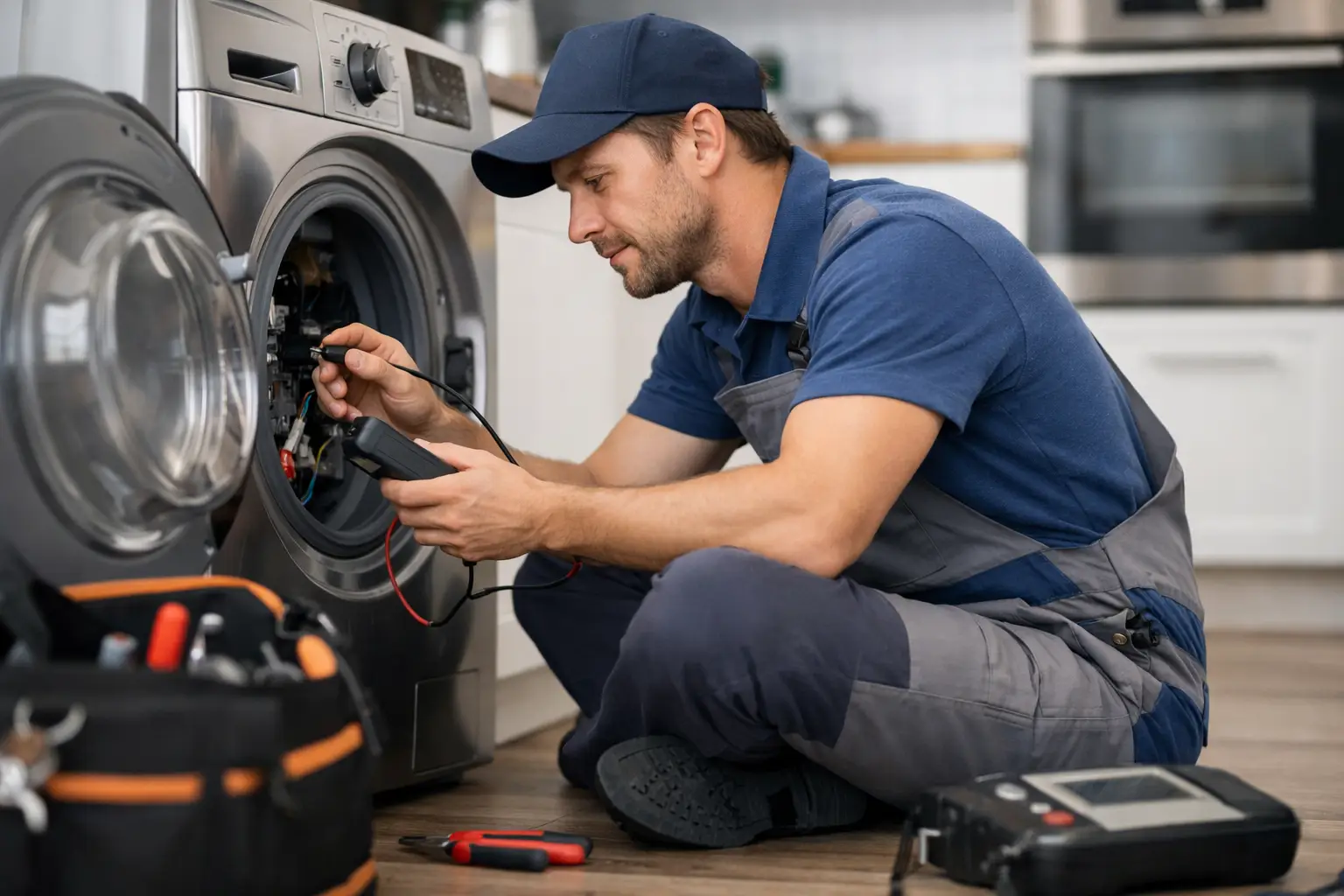
A technician certification can be the difference between guessing at a failed refrigerator and running a controlled diagnostic that earns a customer's trust. For someone entering appliance repair, the credential matters less as a piece of paper than as proof that you can work safely, read the system, use your meter correctly, document the job, and make a repair decision that holds up in the field.
That is what employers, customers, and future business owners actually need. Appliance repair is not a trade where one memorized answer carries you through the day. A washer may stop spinning because of a lid switch, a harness issue, a control board, a drive motor, or a mechanical failure. Certification training should teach you how to separate those possibilities with a repeatable process, not replacing parts until something works.
What Technician Certification Should Mean In appliance repair, certification is most valuable when it validates practical competence. A strong program starts with the foundation that prevents expensive and dangerous mistakes: electrical safety, tool selection, lockout/tagout practices, voltage testing, resistance testing, and safe handling of live circuits.
From there, the training should move into real equipment categories. Laundry appliances, refrigerators, ranges, ovens, microwaves, dishwashers, and ice makers all share core electrical principles, but each has its own common failure patterns and diagnostic sequence. A technician who understands thermistor diagnostics in refrigeration, for example, still needs to know how a dishwasher fill circuit works or why a microwave's high-voltage system requires a different level of caution.
A credible certification process also measures whether the student can follow a workflow. That means confirming the complaint, gathering model information, checking error codes, verifying power and water supply conditions, testing components against specifications, identifying the root cause, documenting findings, and communicating the repair clearly. Those are the habits that turn technical knowledge into paid fieldwork.
Certification Is Not the Same as Licensing This distinction matters for anyone planning to work for themselves. A training certificate shows that you completed a course and passed an assessment. It does not automatically replace state or local requirements for business registration, insurance, sales tax collection, or licensing rules that may apply in your area.
Refrigerant work is the clearest example. Technicians who handle regulated refrigerants need the appropriate federal credential for that work. Local requirements can also vary for electrical, plumbing, or business activity. The smart move is to treat technician certification as your career foundation, then verify the legal and operational requirements where you intend to work.
That is not a drawback. It is how professional trades operate. Training builds your diagnostic and safety capability; compliance steps allow you to offer services legitimately and grow with confidence.
The Skills Employers Actually Look For Service companies need more than someone who can name appliance parts. They need technicians who can arrive prepared, protect the customer's home, diagnose efficiently, explain the issue without overpromising, and close out a job ticket cleanly.
The technical side begins with electrical confidence. You should know how to use a multimeter to check AC voltage, DC voltage, continuity, resistance, and circuit integrity. You should understand the difference between a component that has failed and a component that is not receiving the command or power it needs to operate. That distinction alone can prevent unnecessary parts orders and costly callbacks.
You also need category-specific judgment. A refrigerator that is warm may involve airflow, defrost, a fan motor, a thermistor, a control issue, or sealed system fundamentals. A no-heat dryer may require a safe inspection of the heating circuit, thermal protection, airflow restrictions, and supply voltage. A range with an oven temperature complaint calls for sensor testing, element checks, and control logic evaluation.
Then there is the customer-facing work. Field-ready technicians write clear job notes, record model and serial information, identify parts needed, capture photos when appropriate, and explain whether repair makes economic sense. This documentation protects the business, helps with return visits, and makes customers more likely to approve recommended work.
Why Scenario-Based Training Matters Manuals teach specifications. The field teaches variables. The fastest way to bridge that gap before your first service call is through scenario-based practice that forces you to make decisions.
Consider a refrigerator customer reporting that the freezer is cold but the fresh-food compartment is warm. A weak training program may tell you to inspect the evaporator fan. Better training asks what you would verify first, which symptoms matter, what readings support your conclusion, and what other faults could produce the same complaint. That is diagnostic thinking.
The same principle applies to error codes. An error code is a starting point, not a repair order. It can point toward a circuit, sensor, motor, communication problem, or control issue. A trained technician verifies the fault through testing instead of treating the code as permission to replace the most expensive part.
This is why simulations, graded coursework, and final assessments are worth more than passive video watching. They reveal whether you can apply a workflow under realistic conditions. They also make the transition to job shadowing, employment, or independent service calls far less intimidating.
A Better Path for Career Changers Traditional trade education can be expensive, slow, and difficult to fit around work or family responsibilities. Informal learning can be equally frustrating when it depends on finding a mentor willing to explain every decision. Appliance repair training works best when it is structured enough to build fundamentals and flexible enough to let adults progress toward paid work without putting life on hold.
A focused 12-week path should begin with safety, tools, electricity, and diagnostic discipline before moving into appliance categories. It should then connect technical work to the business side of service: estimating, customer communication, job ticketing, documentation, parts decisions, and repeatable service processes.
Appliance Repair Academy is built around that progression, combining technician-built instruction, more than 80 scenario-based simulations, graded coursework, direct support, and a 75-question final certification assessment. The goal is not to create a technician who has merely watched repairs. It is to prepare someone who can think through a service call, use the right references, and build momentum toward employment or business ownership.
Where AI Fits in Real Diagnostics AI does not replace hands-on technicians. It cannot remove a back panel, verify a voltage drop, inspect a burnt terminal, recover refrigerant, or earn a customer's confidence in the home. What it can do is reduce the time spent searching for information and help technicians stay organized when the truck is full, the schedule is tight, and the model number is unfamiliar.
Used correctly, an AI-powered field tool can help identify components from photos, look up error codes, surface wiring references, guide multimeter checks, organize job tickets, and create customer-ready reports. That makes it a force multiplier for technicians who already understand the basics of safe testing and diagnostic sequence.
The trade-off is simple: tools are only as reliable as the technician using them. A photo-based suggestion is not a confirmed diagnosis. An error-code result is not a verified failed part. The technician still owns the safety check, the meter reading, the judgment call, and the repair outcome. Certification training gives you the framework to use technology without becoming dependent on it.
Choosing a Certification Program That Pays Off Before enrolling, look past the marketing language. Ask what appliances the curriculum covers, how students are assessed, whether there are realistic troubleshooting scenarios, and whether you can get help when you are stuck. Find out whether business operations are included if ownership is part of your goal.
Also ask what happens after the final exam. The strongest programs help you leave with a usable diagnostic process, not just a completion certificate. You should be able to explain how you would approach a no-start washer, a warm refrigerator, a no-heat dryer, or a dishwasher that will not drain. You should know when to test, when to inspect, when to quote, and when to stop because the repair is not safe or economically sound.
Technician certification is a starting line for a serious career, not the finish line. The work gets sharper with every service call, every meter reading, every customer conversation, and every callback you prevent. Build the foundation well, then put it to work.
Explore more career-focused training content on the Appliance Repair Academy website, and download the companion Appliance Repair Assistant AI app to support your hands-on diagnostic workflow.