Appliance Training Reviews That Actually Matter
Read appliance training reviews with a technician's eye: curriculum depth, instructor access, diagnostic tools, costs, and career-ready proof matters most.
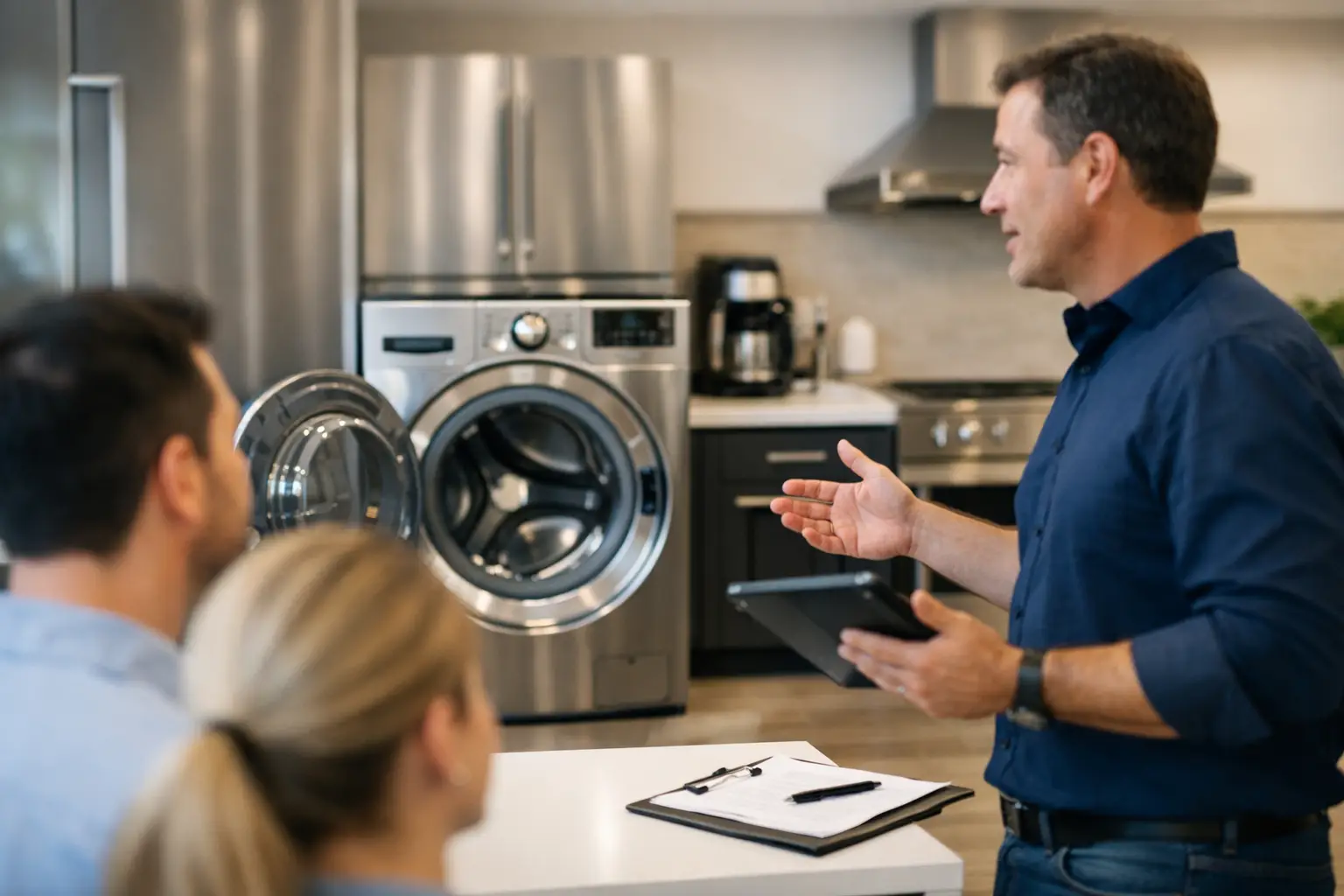
Most appliance training reviews sound alike until you ask the question that matters: Will this program help you diagnose a no-cool refrigerator, safely test a live circuit, document the repair, and get paid for the job? For career changers, appliance training reviews should be evaluated like a service call - by the quality of the process, the tools available, and the result at the end.
A polished website, a short video, or a few broad testimonials cannot tell you whether a course prepares you for field work. Appliance repair is a hands-on trade built around electrical safety, repeatable diagnostics, customer communication, and sound judgment under pressure. The right training should give you more than appliance terminology. It should give you a workflow you can use when a customer says, “My washer won’t spin,” and expects a clear answer.
What Appliance Training Reviews Should Prove
The strongest reviews describe outcomes, not just enthusiasm. A useful review explains what the student was able to do after training: read a wiring diagram, use a multimeter with confidence, identify likely failure points, understand error codes, or build a professional service report.
Look for detail. “Great course” is encouraging, but “I finally understood how to test a thermistor and follow the circuit instead of guessing” is far more meaningful. Appliance repair is a diagnosis business. Replacing parts without proving the fault can burn your profit, waste the customer’s money, and damage your reputation before your business has momentum.
Reviews are also more valuable when they reflect the learner’s starting point. Someone with HVAC, electrical, maintenance, or mechanical experience may move through fundamental concepts faster than a complete beginner. A beginner-friendly program should still start with safety, tool use, and electrical testing before moving into refrigeration, cooking, dishwashers, laundry, and microwave systems.
Check Whether the Curriculum Matches Real Calls
A course can claim to cover appliance repair while spending most of its time on theory or a narrow equipment category. Before placing too much weight on reviews, check what students actually study and in what sequence.
A career-focused program should cover lockout/tagout practices, electrical fundamentals, meter usage, voltage and continuity testing, wiring-diagram interpretation, and structured diagnostic workflows. Those fundamentals transfer across nearly every appliance category. They are what keep a technician from treating every failed appliance as a parts-changing exercise.
From there, the training should address the jobs that fill a service schedule: washers, dryers, refrigerators, ranges, ovens, microwaves, and dishwashers. Refrigeration instruction should include sealed system fundamentals and thermistor diagnostics. Laundry training should explain motors, lid locks, drain systems, and control logic. Cooking and microwave modules should take safety seriously, especially around high-voltage components.
The order matters. A student who learns error codes without learning how to verify voltage, resistance, and continuity may know what a control panel displays but not whether the displayed code points to the true failure. Real field readiness comes from knowing how to test, isolate, confirm, and explain.
Why Simulations Matter Before You Get in a Customer's Home
Job shadowing can be valuable, but it is inconsistent. One week may bring three dryer calls and no refrigeration work. Another may be full of simple maintenance jobs with few diagnostic decisions. Self-paced videos can have the same gap: you can watch a repair and still freeze when you must choose the next test yourself.
Scenario-based simulations close part of that gap. They put learners in diagnostic sequences where the symptom, test result, wiring reference, and next decision all matter. A course with 80 or more simulations gives students repeated practice thinking through faults before a customer is waiting in the kitchen.
When reading reviews, pay attention to mentions of practical exercises, graded coursework, assessments, and feedback. These details suggest the student had to demonstrate understanding, not merely play a video in the background. Training should create productive pressure before the first paid call creates real pressure.
Instructor Access Is a Serious Differentiator
Appliance repair has plenty of gray areas. A wiring diagram may be hard to read. A meter value may be unexpected. A machine may have multiple possible failures, and the technician needs help deciding what to test next. That is why instructor access and a technician community deserve more attention than flashy course production.
Reviews that mention specific help with diagnostics, safety questions, or workflow decisions are worth studying. The best instructors do not just give an answer. They explain the test path: what the symptom suggests, which circuit to check, what reading confirms the fault, and how to document the repair.
It also matters who built the curriculum. Training designed by an active repair-company owner usually has a different feel than material assembled only from manuals. It is more likely to include the operational realities of running calls, communicating findings, handling approvals, and protecting margins.
Evaluate the Tools Included With Tuition
Modern technicians need hands-on skill first, but practical digital tools can make that skill faster and more consistent. A photo-based diagnostic reference, error-code lookup, wiring information, multimeter guidance, job ticketing, and customer-ready reporting can reduce time spent searching and help a newer technician stay organized.
The trade-off is simple: an app should support your diagnostic process, not replace it. No tool can safely test voltage for you, verify continuity, recover refrigerant, or earn customer trust at the door. But the right tool can help you identify a model, interpret an error code, locate a reference, and produce clear documentation while you are still on the call.
In reviews, distinguish between vague claims about “AI-powered learning” and practical descriptions of what the tool does in the field. A worthwhile platform makes technicians more capable and more efficient. It should not encourage guesswork or promise that software can replace electrical knowledge.
Price Matters, but So Does the Full Cost of Getting Ready
Training cost is a legitimate concern, especially for adults balancing rent, family responsibilities, or an existing job. Still, compare the full path, not only the tuition number. A low-cost course that covers one appliance category, offers no feedback, and requires separate purchases for diagnostic tools may cost more over time than a complete program with clear support and broad category coverage.
Ask what is included. Does tuition cover a defined program length, graded coursework, a final certification assessment, instructor or community access, and field-ready software? Are there financing options that let you start without delaying your career move? Does the course address business operations if you want the option to work for yourself later?
At Appliance Repair Academy, the 12-week program is built around the full service-call workflow, from safety and electrical testing through major appliance categories, customer documentation, and repair-business operations. Students complete more than 80 scenario-based simulations and a 75-question final certification assessment. Paid tuition also includes a 12-month subscription to the Appliance Repair Assistant AI app, giving learners a practical tool they can use alongside their hands-on training.
That package will not be the best fit for every person. If you only want to repair your own dryer or already have years of appliance field experience, a full launch-oriented program may be more than you need. But for a new technician pursuing employment or an independent service business, the value is in having a connected system rather than scattered lessons.
Read Reviews for Career Evidence, Not Income Hype
Appliance repair can support a strong income, including a six-figure path for technicians who build technical skill, work efficiently, and eventually operate a disciplined service business. It is not automatic. Earnings depend on market demand, pricing, dispatch volume, experience, overhead, and your ability to convert accurate diagnostics into approved repairs.
Be cautious with any review or training claim that treats certification as a guaranteed paycheck. Certification can show that you completed a standard of training. Your long-term income comes from competence, professionalism, and consistent execution on real calls.
The better sign is career evidence: students gaining confidence with meter work, getting hired by service companies, taking paid jobs, improving their diagnostic speed, or building systems for customer communication. Those outcomes point toward a training program that understands the difference between finishing a course and becoming employable.
Use Reviews to Find Your Starting Point
The right program should make the next step feel clear, not confusing. If you are coming from retail, warehouse work, hospitality, construction, maintenance, or an office career you no longer trust, you do not need to arrive with appliance expertise. You need a structured path that teaches safe, methodical work and gives you enough repetition to build confidence.
Read the details behind appliance training reviews, then choose the training that prepares you to think like a technician when the machine is in front of you. Explore Academy content through Appliance Repair Academy, and download the companion Appliance Repair Assistant AI app to see how field-ready diagnostic support can work alongside hands-on skill development.