EPA 608 Exam Preparation for Appliance Techs
Build EPA 608 exam preparation around refrigerant safety, recovery rules, and real appliance diagnostics so you can test with confidence in the field.
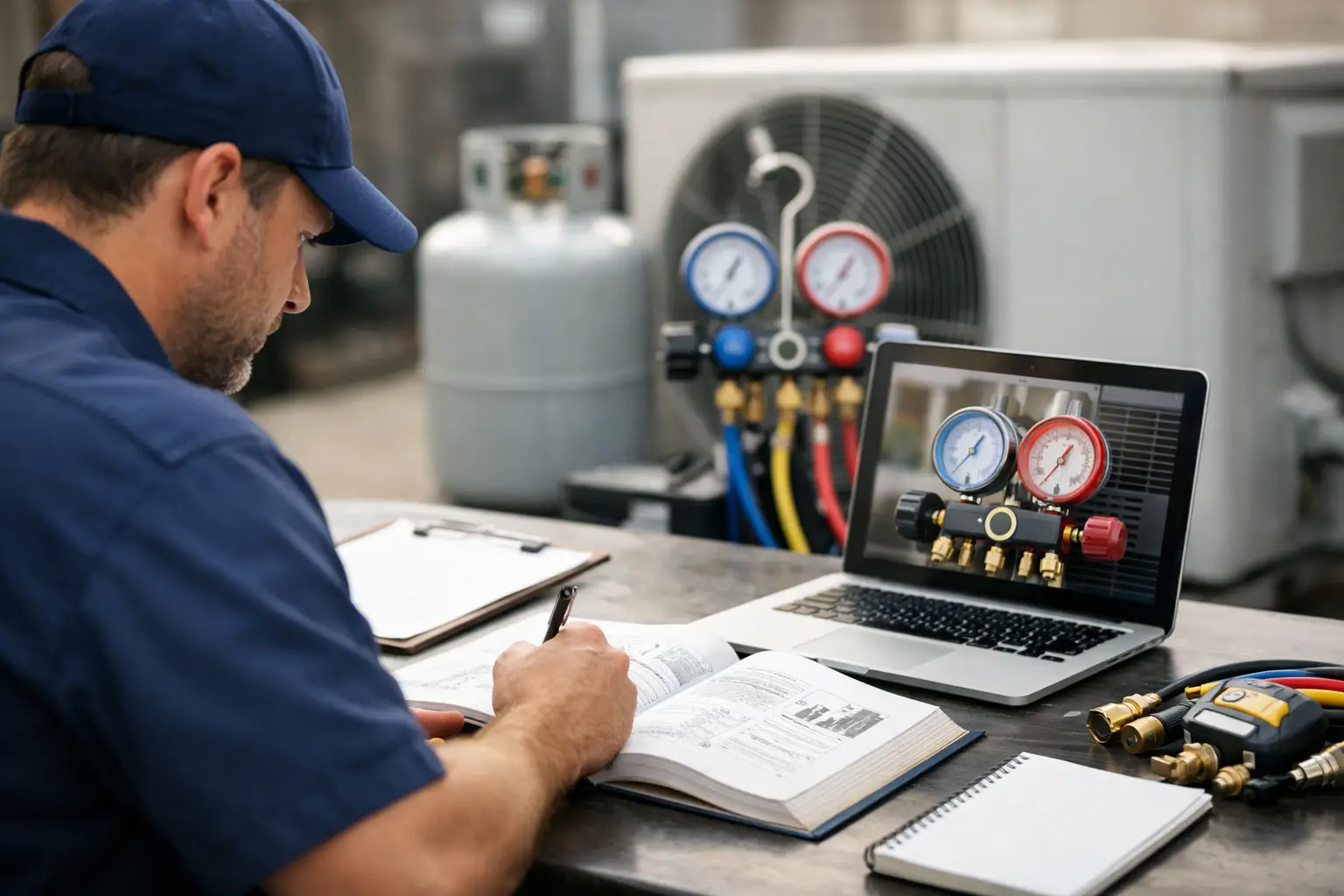
A failed EPA 608 test can delay the exact work that makes appliance repair valuable: diagnosing and servicing refrigeration systems legally, safely, and profitably. Strong EPA 608 exam preparation is not about memorizing random rules the night before a test. It is about building a working understanding of refrigerants, recovery equipment, evacuation procedures, leak rules, and the environmental responsibilities that come with opening a sealed system.
For an aspiring appliance technician, this credential is a practical career move. Modern refrigerators, freezers, ice makers, and many comfort-cooling systems depend on controlled refrigerant circuits. If you want to move beyond basic appliance repairs and take on sealed-system work, EPA certification is part of your professional foundation.
Know What the EPA 608 Exam Actually Covers
EPA Section 608 certification is required for technicians who maintain, service, repair, or dispose of equipment that could release regulated refrigerants into the atmosphere. The exam is organized around a Core section and equipment-specific categories. To earn a particular certification, you pass the Core section plus the related Type section.
Type I covers small appliances, including many household refrigerators, freezers, window air conditioners, dehumidifiers, and similar factory-sealed equipment. Type II covers high-pressure and very-high-pressure appliances. Type III covers low-pressure appliances, which are more common in larger commercial settings. Passing Core, Type I, Type II, and Type III earns Universal certification.
For appliance repair students, Type I is often the most immediately relevant category. But Universal certification can expand your options with service companies and prevent you from being limited as your work moves into broader refrigeration or HVAC-adjacent calls. The right choice depends on your career plan, but many technicians pursue Universal because it gives them more room to grow.
The Core section is where many first-time test takers underestimate the material. It covers environmental impacts, refrigerant safety, recovery requirements, substitute refrigerants, shipping cylinders, dehydration, evacuation, and general regulatory rules. These are not abstract facts. They affect whether you can recover a charge safely, protect yourself from injury, and avoid venting violations on a real job.
Build EPA 608 Exam Preparation Around Concepts
The fastest way to create weak test results is to study answers without understanding why they are correct. EPA questions often use similar terms, close temperature ranges, and rule-based scenarios designed to test whether you understand the condition in front of you.
Start with the refrigerant cycle. You should be able to explain what the compressor, condenser, metering device, and evaporator do without looking at a diagram. Understand the difference between high side and low side pressures, and know why refrigerant changes state as it absorbs and rejects heat. When that foundation is clear, questions about recovery, evacuation, charging, and troubleshooting make more sense.
Next, focus on safety. Refrigerant does not need to be flammable to create serious risk. A release can cause frostbite, displace oxygen in a confined space, or become dangerous when exposed to high heat. Some newer refrigerants have added flammability considerations. Learn proper ventilation, personal protective equipment, cylinder handling, and why you never use oxygen or compressed air for pressure testing a refrigeration system.
Then learn the logic behind evacuation and dehydration. Pulling a vacuum is not a ceremonial final step. It removes air and moisture that can damage a system, contribute to acid formation, restrict flow through ice, and create unstable operating conditions. Know the difference between a deep vacuum, a standing vacuum test, and a system that is still leaking or holding moisture.
Study the Rules That Produce Test Questions
EPA 608 material includes specific recovery and disposal requirements, so some memorization is necessary. The better approach is to group rules by job stage instead of trying to retain disconnected numbers.
Think through a sealed-system job from arrival to closeout. First, identify the refrigerant and appliance type. Then inspect the system and prepare the recovery machine, hoses, scale, and approved recovery cylinder. Recover refrigerant using the correct procedure. Repair the fault. Pressure test with the appropriate gas. Evacuate the system. Recharge by weight when required. Verify operation and document the work.
As you study, attach rules to each stage of that workflow. For example, know that recovery cylinders must not be overfilled, should be weighed, and should be handled and transported correctly. Know that refrigerant cannot be intentionally vented. Know that different equipment categories can have different recovery requirements. Know when a system is considered disposed of and what that means for recovery.
This method matters because the exam may ask a direct regulation question, but the field will ask you to make the correct decision under pressure. A technician who knows the workflow can reason through a question even when the wording is unfamiliar.
Use Practice Tests the Right Way
Practice exams are valuable, but only after you have studied the underlying material. Taking the same questions repeatedly can create false confidence. You may recognize the answer pattern without being able to explain the rule.
Use practice questions in rounds. On the first round, answer without notes and mark every question you guessed on. On the second round, review why each incorrect answer was wrong, not just why the correct answer was right. If a question involves recovery equipment, sketch the setup. If it involves a pressure or temperature relationship, explain it out loud in plain language.
Keep an error log with three columns: the topic, the rule or concept you missed, and the reason you missed it. You may discover that your problem is not refrigerant knowledge at all. It may be confusing terminology, rushing through “except” questions, or mixing up equipment categories. That is useful information because it gives your next study session a target.
Do not chase a perfect practice-test score at the expense of practical knowledge. Your goal is to pass the exam, but your larger goal is to avoid becoming the technician who holds a certification without knowing how to set up recovery equipment or recognize an unsafe condition.
A Two-Week Study Plan for Working Adults
If you are balancing a job, family, or a 12-week skills program, a focused two-week plan is more realistic than waiting for an open weekend that never arrives. Plan for 45 to 60 minutes most days, with one longer review session each week.
During the first three days, cover the refrigerant cycle, basic components, refrigerant safety, and environmental rules. Days four through six should focus on recovery machines, cylinders, evacuation, dehydration, leak testing, and charging principles. Spend the next three days studying the rules for your intended Type section, especially the equipment categories you expect to service.
Use days 10 through 12 for timed practice exams and targeted review. Reserve the final two days for your error log, difficult terminology, and a calm review of the concepts that keep showing up. If you are pursuing Universal certification, give yourself additional time. The broader credential is worthwhile, but it demands more than cramming.
Connect the Credential to Real Appliance Diagnostics
EPA 608 certification is one piece of technician readiness, not the whole job. A refrigerator that is warm may have a sealed-system issue, but it could also have a failed condenser fan motor, defrost problem, damaged door gasket, faulty thermistor, control-board issue, or airflow restriction. Good technicians test before they assume.
That is why appliance training should connect sealed-system fundamentals to electrical testing, wiring diagrams, thermistor diagnostics, airflow checks, and customer documentation. Before you attach gauges or discuss a refrigerant repair, you need a repeatable diagnostic process. Confirm the complaint. Check for obvious mechanical and electrical faults. Measure what the system is doing. Then decide whether sealed-system work is justified.
At Appliance Repair Academy, that field-first approach includes structured training, scenario-based simulations, and practical tools that support the way technicians actually work. The credential opens a door. Your diagnostic process is what turns that opportunity into dependable, paid service calls.
Test Day: Stay Methodical
Read every question fully, especially questions containing qualifiers such as “most,” “best,” “except,” or “before.” Eliminate answers that create an unsafe condition or conflict with the basic rule against refrigerant venting. If two choices seem close, return to the equipment type and job stage described in the scenario.
Bring the required identification, confirm the testing provider’s rules before you arrive, and avoid last-minute study marathons. A rested technician who understands the material will outperform someone trying to force another hundred flashcards into an exhausted brain.
EPA 608 certification can become a line on your resume, but it should also become a standard for how you work: recover responsibly, diagnose carefully, and protect the customer’s equipment before replacing expensive parts. Explore Appliance Repair Academy content for technician training built around real service workflows, and download the companion AI-powered diagnostic app at appliancerepairai.org/download to support your hands-on repair process.
Keep reading
Appliance Repair Certifications
Read moreAppliance Repair School vs Apprenticeship
Read moreWhirlpool WRS588FIHZ Water Inlet Valve
Read moreLearn this the repeatable way
The Appliance Repair Academy is a 12 week online certification taught by a working technician. Tuition is $949 and covers laundry, refrigeration, cooking, and dishwasher systems, with the Appliance Repair AI diagnostic app included for a full year.
Explore the program