The AI Service Technician Future Is Hands-On
The AI service technician future rewards pros who can test, repair, document, and use smart tools to complete appliance jobs with confidence and speed.
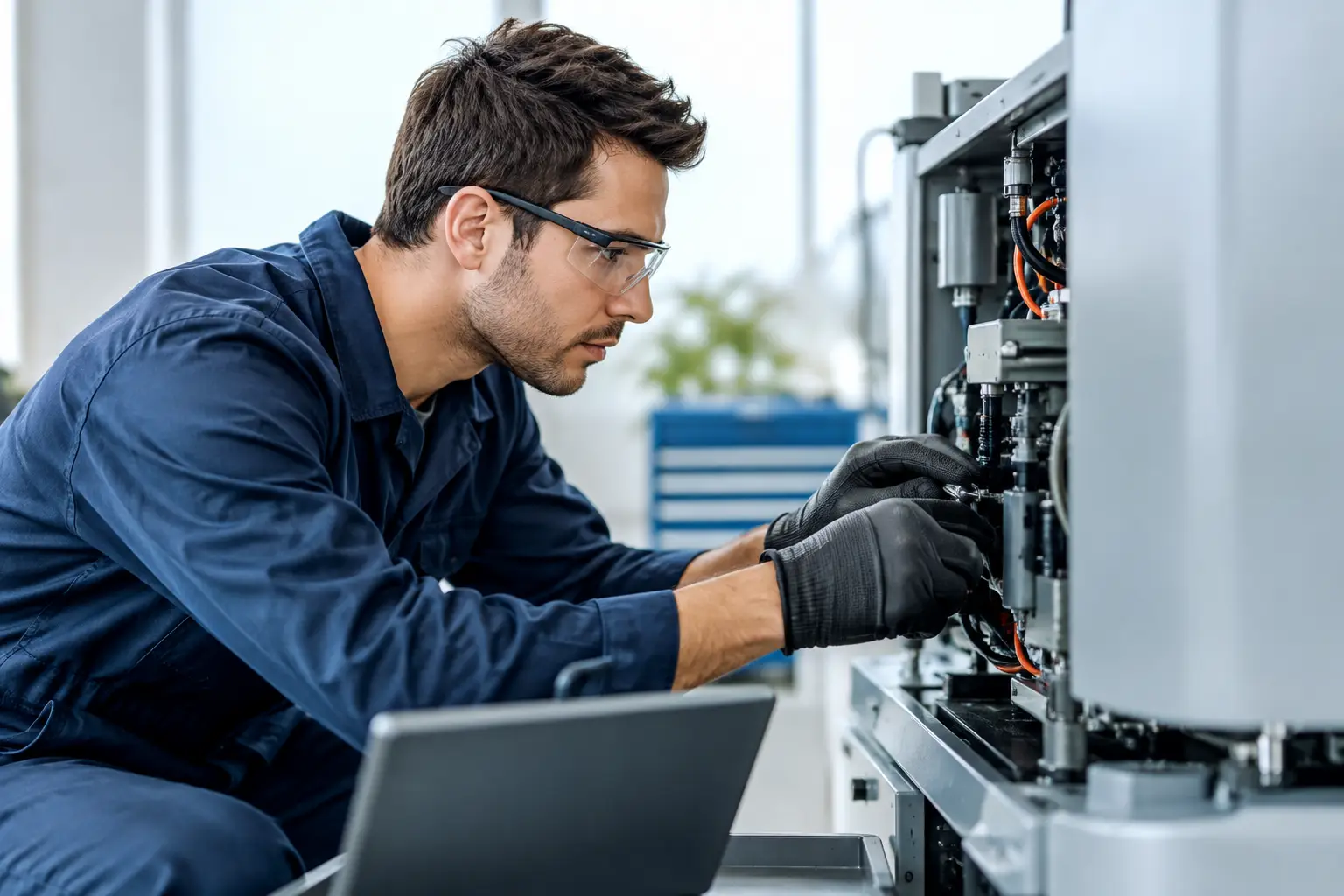
A refrigerator is warm, the customer is frustrated, and the display is showing an error code that could point to three different failures. The AI service technician future is not a robot arriving at the door to replace a technician. It is a prepared technician using faster information, better documentation, and a disciplined diagnostic process to get the appliance running again.
That distinction matters for anyone choosing a trade. Appliances still need a person who can work safely around live voltage, isolate a failed component, understand a wiring diagram, protect the customer’s home, and decide whether a repair makes economic sense. AI can reduce the time spent searching, guessing, and writing reports. It cannot physically perform lockout/tagout, verify voltage with a multimeter, replace a drain pump, or braze a sealed-system repair.
For new technicians and future business owners, that creates a strong opportunity. The people who pair hands-on trade skill with AI-assisted workflows will be positioned to work faster, communicate more clearly, and handle more jobs without cutting corners.
What the AI Service Technician Future Actually Looks Like
AI is already useful in appliance repair when it is treated as a field tool, not a substitute for technical judgment. A technician may use a photo of a model tag to identify the unit, look up an error code, review likely fault paths, pull a wiring reference, or create customer-ready notes before leaving the driveway.
The work itself remains physical and diagnostic. A dishwasher that will not drain may have a clogged air gap, a blocked hose, a failed drain pump, a broken wire, a control issue, or a customer-use issue. An AI tool can help organize those possibilities. The technician still needs to inspect the installation, check for obstructions, measure voltage at the pump, test resistance where appropriate, and confirm operation after repair.
That is why the strongest career path is not “learn AI instead of a trade.” It is “learn the trade well enough to use AI without being misled by it.” A wrong diagnosis from a tool is still a wrong diagnosis if the technician cannot verify the facts in the field.
AI Will Raise the Value of Structured Diagnostics
The old model of repair was often built around memory, informal job shadowing, and parts swapping. A veteran technician might recognize a common symptom immediately, while a newer technician could spend an hour searching manuals or calling for help. Experience remains valuable, but modern tools can shorten the gap between beginner and productive field technician.
AI helps most when the technician has a repeatable workflow. Start by confirming the complaint. Identify the appliance and model. Ask what happened before the failure. Check for simple mechanical or installation causes. Review the technical data. Test the circuit or component. Make the repair only after the evidence supports it. Then run a functional test and document the result.
This approach protects both the technician and the customer. It limits unnecessary parts, reduces repeat visits, and gives the customer a clear explanation of what failed and why. It also makes it easier for an independent technician to build trust, earn reviews, and justify professional service pricing.
Faster information does not mean faster guessing
There is a real trade-off with AI-assisted diagnostics. Fast answers can create false confidence. Error codes are clues, not automatic parts orders. A thermistor-related code, for example, may require resistance testing, temperature verification, wire-harness inspection, and control-board evaluation. Replacing the first part named in a search result is not professional diagnostics.
The technician who wins long term will use AI to narrow the path, then use meter readings, visual inspection, service data, and system knowledge to prove the repair. That is the difference between using technology and depending on it.
The Hands-On Skills AI Cannot Replace
Appliance repair sits at the intersection of electrical work, mechanical systems, refrigeration, customer service, and business operations. These are practical skills developed through guided instruction and repeated decision-making.
A capable technician needs to know how to work safely before removing a panel. They need electrical fundamentals to distinguish between a failed load and a missing supply. They need to understand laundry systems, cooking equipment, dishwashers, microwaves, and refrigeration. They also need the judgment to know when a repair is appropriate, when a unit needs a specialized sealed-system technician, and when replacement may be the better recommendation.
Consider a no-cool refrigerator call. A tool may surface common causes such as dirty condenser coils, evaporator-fan failure, defrost problems, compressor-start components, or sealed-system restrictions. But the technician must determine whether the compressor is running, whether the fans operate, whether frost patterns are normal, whether voltage is present, and whether the symptoms point to a repair that is within their scope. Those decisions affect safety, profitability, and customer confidence.
Customer-facing skill matters just as much. Homeowners do not only pay for a part installation. They pay for a technician who arrives prepared, explains the finding in plain language, protects the work area, gives clear repair options, and leaves documentation behind. AI can help create a clean job ticket and report, but the technician owns the relationship.
Why This Is Good News for Career Changers
Office roles may be increasingly exposed to automation, but a service call happens in the real world. Every home has different access issues, appliance conditions, installation mistakes, maintenance history, and customer concerns. That variety makes appliance repair difficult to automate end to end.
It also makes the work entrepreneurial. A technician can pursue employment with a service company, build a side business, or grow an independent operation with dispatch, scheduling, and customer systems. AI can make a one-person business more capable by reducing administrative drag. It can help organize job details, generate clearer notes, and make technical references easier to access while the technician focuses on the repair.
Income potential depends on market, speed, reputation, service mix, pricing, and whether you work for yourself or an employer. There is no automatic six-figure outcome. But technicians who diagnose accurately, avoid callbacks, communicate well, and manage jobs professionally have a stronger path to higher earnings than those who rely on guesswork.
Train for the Technician Role, Not Just the Tool
The right entry point is structured training that teaches the logic behind a repair. Before relying on a diagnostic app, learn safe meter use, voltage and continuity testing, circuit tracing, component testing, and how to read technical information. Then practice applying those skills to realistic failures.
Appliance Repair Academy is built around that progression. Its 12-week program starts with safety, tools, and electrical testing, then moves into laundry, refrigeration, cooking appliances, microwaves, dishwashers, diagnostic workflows, documentation, and repair-business operations. More than 80 scenario-based simulations give students practice making decisions before they face a customer’s appliance, and graded coursework leads to a 75-question final certification assessment.
Students also receive a 12-month subscription to the Appliance Repair Assistant AI app with paid tuition. The app supports photo-based fault detection, error-code lookup, wiring references, multimeter guidance, job ticketing, and customer-ready reporting. Used alongside hands-on instruction, it reinforces a professional workflow instead of replacing one.
Build a workflow you can trust
A useful technician workflow is simple: arrive prepared, confirm the complaint, inspect before disassembly, test before replacing parts, verify the repair, and document the job. AI can support every stage, but it should never skip the evidence.
That mindset is especially valuable when the job is unfamiliar. Rather than pretending to know every model from memory, a technician can use the available information to identify the unit, find the correct test procedure, and make a measured decision. Customers respect that process because it produces answers they can understand.
The Future Belongs to Technicians Who Can Prove the Fix
The next generation of appliance technicians will not be measured only by how many model numbers they remember. They will be measured by how reliably they diagnose, how safely they work, how clearly they communicate, and how efficiently they turn information into a verified repair.
Explore Appliance Repair Academy content to see how structured, career-focused training prepares you for real service calls. Then download the Appliance Repair Assistant AI app to see how AI-powered references and job documentation can support your hands-on work. The most valuable tool in the truck will still be the technician who knows how to test, think, and prove the fix.