Essential Appliance Technician Hand Tools
Essential appliance technician hand tools build safer, faster diagnostics. Learn what to buy first, what can wait, and how each earns its spot on calls.
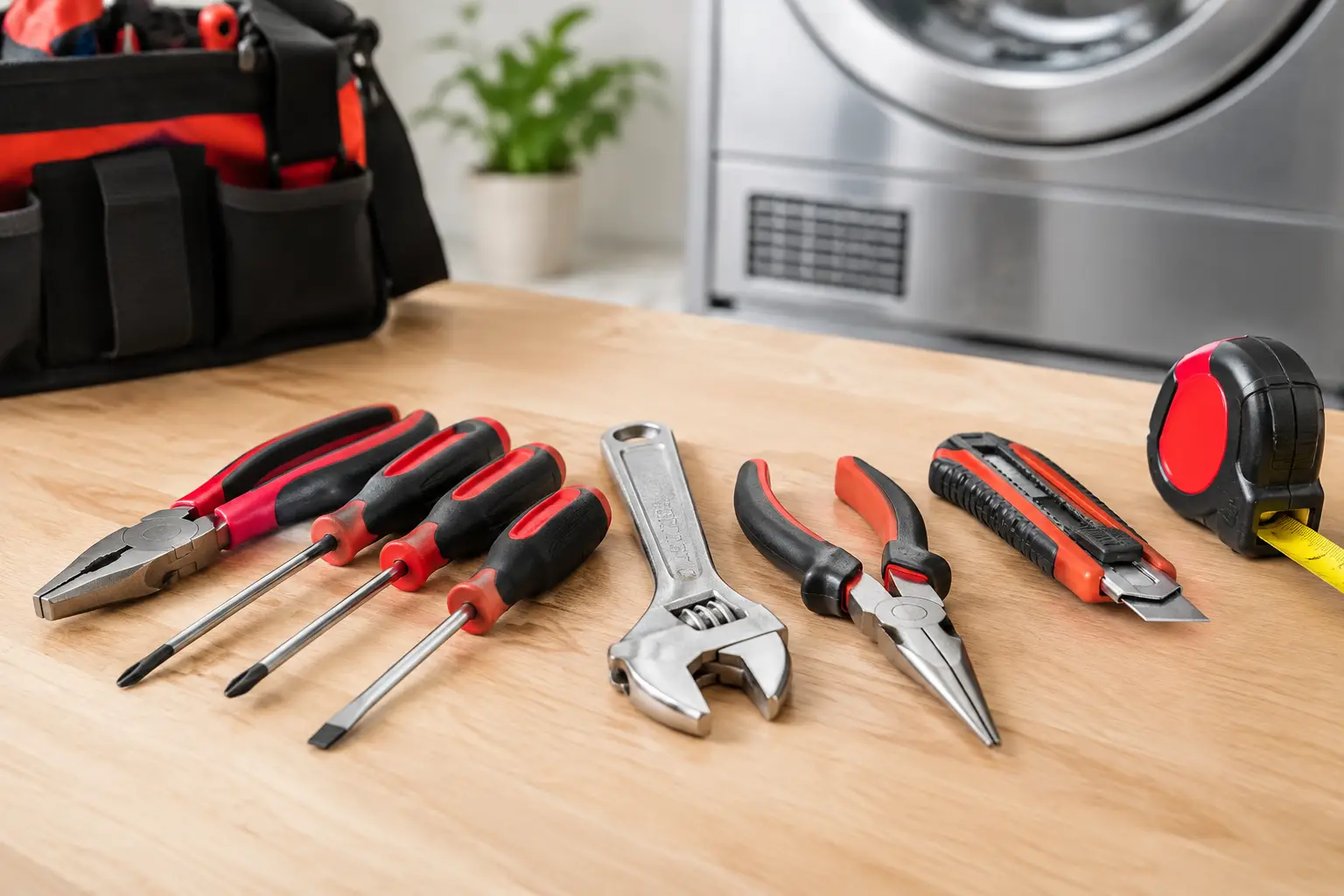
A no-cool refrigerator, a dryer that will not heat, and a dishwasher flashing an error code all demand the same thing before a technician reaches for a replacement part: a dependable set of essential appliance technician hand tools. Your tool bag is not a status symbol. It is your mobile work station for isolating faults, opening cabinets without damage, making safe electrical checks, and putting the appliance back together correctly.
For someone entering appliance repair, the smartest move is not buying every tool marketed to contractors. Start with the hand tools that support repeatable diagnostics across laundry, refrigeration, cooking, dishwashers, and microwaves. Add specialty equipment when the work you are performing justifies it.
Why Hand Tools Matter Before Specialty Gear
Appliance repair is a diagnostic trade. A customer may describe a washer as “dead,” but the cause could be a tripped thermal fuse, failed lid lock, broken wire, loose terminal, control-board issue, or missing supply voltage. You cannot test a component, inspect a harness, or access a wiring diagram without first getting into the machine safely and efficiently.
Good hand tools reduce time on every stage of a call. They help you remove panels without rounding fasteners, reach recessed screws, disconnect terminals without breaking them, cut and terminate wire properly, and document work that looks professional to the customer. Cheap or incomplete tools can turn a straightforward repair into a second visit.
The goal is field readiness, not a packed bag. Buy tools you can use across most service calls, learn their limits, and maintain them. A technician who understands safe access and electrical fundamentals will outperform someone carrying specialty tools they do not know how to use.
Essential Appliance Technician Hand Tools to Buy First
Screwdrivers and nut drivers
Most appliance cabinets are held together with Phillips, flat-head, hex-head, Torx, or square-drive fasteners. A quality multi-bit screwdriver is useful for light work, but it should not be your only driver. Build around dedicated Phillips and flat-head screwdrivers, then add a nut-driver set with common sizes such as 1/4-inch, 5/16-inch, 3/8-inch, and 1/2-inch.
Nut drivers are used constantly on appliance panels, blower housings, brackets, burners, evaporator covers, and control compartments. Magnetic tips are convenient, especially when working inside a tight dryer cabinet or behind a range control panel. The trade-off is that magnetic tools can collect metal debris, so keep them clean.
A Torx bit set is also a practical early purchase. Torx fasteners are common on modern appliances, particularly door assemblies, control housings, and some refrigeration components. Keep a small assortment of extension shafts and bit holders in the bag. Deeply recessed fasteners are normal in this trade.
Pliers for gripping, cutting, and terminals
A basic plier set should include needle-nose pliers, slip-joint or tongue-and-groove pliers, diagonal cutters, and lineman’s pliers. Needle-nose pliers help retrieve screws, manipulate spring clamps, and remove wire terminals in confined spaces. Tongue-and-groove pliers give you controlled grip on hoses, fittings, and larger clamps without improvising with tools that can slip.
Diagonal cutters are for cutting zip ties, small wire, and damaged terminals. Lineman’s pliers handle heavier wire cutting and twisting when a repair requires a proper splice. Do not use a dull cutter to tear through wire insulation. It creates messy repairs and can nick the conductor underneath.
Add a small set of locking pliers, but use them selectively. They can save a call when a fastener is damaged or a shaft must be held in place, yet they can also scar finished surfaces and deform fragile parts. Controlled force beats brute force.
Wire strippers, crimpers, and terminal tools
Wiring repairs are part of real field service. Vibration, heat, moisture, and repeated door movement can damage harnesses and terminals. A combination wire stripper and crimper supports clean repairs on common wire gauges, while a terminal crimper helps create secure connections when replacing insulated terminals.
Keep an assortment of high-quality insulated terminals, heat-shrink tubing, and wire ties with your tools. The repair standard is not “it makes contact right now.” The standard is a mechanically secure, electrically sound repair that can survive the operating environment.
A terminal release tool or small pick set is equally valuable. Appliance connectors often use locking tabs that break when technicians pull on the wire instead of releasing the terminal correctly. Learn to inspect the connector body, identify the retention point, and remove it without creating a new fault.
Picks, hooks, and inspection tools
A compact pick-and-hook set earns its place quickly. Picks help release harness clips, clean debris from tight areas, lift retaining tabs, and guide belts or springs into position. They are especially useful when inspecting door-lock assemblies, control connectors, and drain-pump wiring.
Include a telescoping inspection mirror and a small flashlight or headlamp. A headlamp keeps both hands available when checking under a dishwasher, behind a refrigerator, or inside a dark cabinet. Good visibility is not a luxury. It prevents missed cracks, burnt terminals, water trails, and loose connections.
Adjustable wrench, socket set, and ratchet
An adjustable wrench handles many water-line, hose, and leveling-leg tasks. Choose one with a smooth adjustment mechanism and jaws that meet cleanly. A small socket set with a ratchet, extension, and common metric and SAE sizes is useful for motors, brackets, and mounting hardware where a nut driver does not provide enough torque.
Do not overbuy sockets at the beginning. Appliance work uses a narrower range than automotive work, and access can matter more than raw torque. A compact set that fits behind a washer is more useful than a massive case left in the truck.
Utility knife, tape measure, and marking tools
These small tools prevent avoidable mistakes. A utility knife is useful for opening packaging, trimming insulation, and cutting old tape or wire ties. A tape measure helps verify appliance clearances, hose lengths, cabinet openings, and replacement-part dimensions. A permanent marker lets you label disconnected wires, mark mounting positions, or note a customer’s unit information.
Use a dedicated notebook or digital job-ticket workflow to capture model and serial numbers, fault symptoms, test readings, parts needed, and customer authorization. Hand tools get you into the machine. Clear documentation protects your time, improves parts ordering, and makes you look like the professional customers want to call again.
Safety Tools Are Not Optional Extras
A hand-tool kit is incomplete without safety equipment. Before opening an appliance, disconnect power when the diagnostic step allows it and follow lockout/tagout practices. Verify voltage with an appropriate meter before touching conductors. Refrigerators, ranges, dryers, and microwaves can expose technicians to hazardous electrical circuits, sharp sheet metal, hot surfaces, and stored energy.
Carry cut-resistant gloves, safety glasses, and a non-contact voltage tester. Gloves do not replace safe work procedures, and a non-contact tester does not replace a multimeter for confirming voltage, but both add useful layers of protection. Keep a first-aid kit in the vehicle as well. Sheet-metal cuts are common when access panels are rushed.
Microwave service requires separate caution. High-voltage capacitors can retain a dangerous charge even after unplugging. Do not treat microwave repairs like routine countertop-appliance work. Learn the correct discharge and verification procedures before servicing high-voltage sections.
Build Your Tool Bag Around Your Actual Calls
Your first bag should support access, inspection, basic mechanical repair, and electrical diagnostic work. As you gain experience, your purchases should follow the jobs you are actually seeing. A technician focused on laundry may add belt tools, bearing-service equipment, and specialty clamp pliers. Someone moving into refrigeration will need equipment beyond basic hand tools, including tools and training for sealed system fundamentals.
That is why structured training matters. You need more than a shopping list. You need to know which panel to remove, which test to perform first, what reading should be expected, and when a symptom points to a control issue rather than a failed component. Appliance Repair Academy trains that workflow through hands-on lessons, scenario-based simulations, safety instruction, and diagnostics across major appliance categories.
Buy quality where failure creates risk or costs time: drivers, cutters, strippers, pliers, and safety gear. Save money on duplicate sizes and specialty tools until your service volume proves the need. Keep tools organized by function, replace damaged insulation or worn tips immediately, and reset the bag after every call.
A capable tool bag is built one successful repair at a time. Explore Appliance Repair Academy content to build the diagnostic skills behind each tool, and download the Appliance Repair Assistant AI app for field-ready references, test guidance, and customer documentation support.